Metal Seed Phrase Plate
How to choose a metal seed phrase plate: stamped vs tile vs engraved, why 304 stainless beats aluminium in a house fire, and the four-letter rule that halves the work.

DeFi Farmer Research Desk
Aug 5, 2026 · 10 min read
In brief. A metal seed phrase plate survives the fire, flood, and slow decay that destroy paper backups. Choose solid stainless steel or titanium, stamped or punched rather than assembled from loose tiles, and record only the first four letters of each BIP-39 word.
On this page7 sections
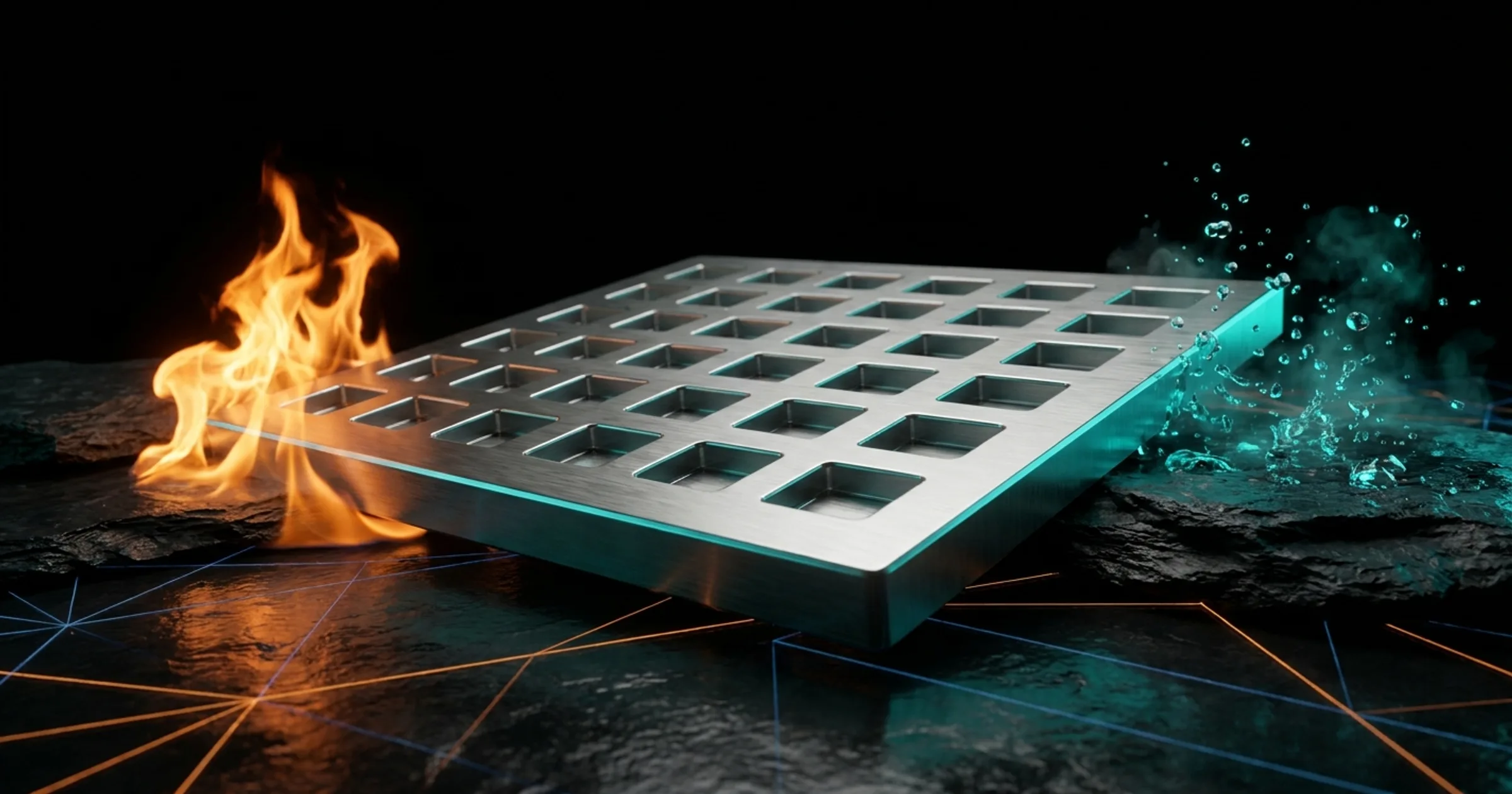
A metal seed phrase plate stores your recovery words in steel or titanium so they survive the three things that destroy paper: fire, water, and time. Paper is not a backup medium for something irreplaceable — it is a temporary note that happens to be readable today. Here is how to pick a plate, and the mistakes that make an expensive one useless.
Why paper fails
Not theoretically — routinely, in these four ways:
Fire. Paper ignites at roughly 230 °C. A structure fire is several times that. There is no version of a house fire your paper backup survives.
Water. Flooding, a burst pipe, or the water used to put out the fire. Inkjet ink runs, thermal paper blanks, and pen ink on damp paper blurs into ambiguity — and "was that a 3 or an 8" is fatal when the checksum has to validate.
Time. Ballpoint ink fades. Thermal receipt paper goes blank within a few years. Paper yellows, becomes brittle, and tears at the folds. A backup made today needs to be legible in fifteen years.
Discovery. Paper looks like paper. It gets tidied away, binned by a family member, or found by someone who now understands exactly what they have.
View as table
| Melting point versus house fire temperature | Melting point versus house fire temperature |
|---|---|
| Aluminium | 660 °C |
| House fire (typical peak) | 900 °C |
| Stainless steel 304 | 1,400 °C |
| Titanium | 1,668 °C |
The chart is the whole argument for material choice. Aluminium plates are cheap, light, and easy to stamp — and their melting point is inside the range a house fire reaches. Stainless steel and titanium are not.
The four construction types
| Type | How it works | Strength | Weakness |
|---|---|---|---|
| Stamped plate | You hammer letter punches into solid metal | Permanent, no moving parts, cheapest durable option | Requires effort and care; mistakes are not correctable |
| Punched / centre-marked | You mark a pre-printed grid of letters | Fast, no stamping skill needed | Marks can be ambiguous if not fully punched |
| Tile system | Pre-engraved letter tiles slot into a rail | Easy to assemble, easy to correct | Tiles can dislodge — heat, impact, or a drop scrambles the order |
| Engraved / etched | Laser or chemical marking | Neat and precise | Shallow marks can be polished away by heat and corrosion |
Independent stress testing of these products — burning, crushing, and corroding them — has consistently found the same pattern: solid single-piece designs outperform assembled ones. A capsule of loose tiles that survives the fire intact but arrives as an unordered pile of letters has technically preserved your data and practically destroyed it.
The four-letter rule
Every word in the BIP-39 English list is uniquely identified by its first four letters. No two of the 2,048 words share the same first four characters.
That means abandon can be recorded as ABAN, and ability as ABIL. Practical consequences:
- Roughly half the stamping work. For a 24-word phrase that is 96 characters instead of about 160.
- Fewer errors. Fewer strikes means fewer misaligned or doubled characters.
- Smaller plates work. A compact plate can hold 24 words comfortably at four characters each.
- No ambiguity. Any BIP-39 tool or wallet can expand a four-letter prefix back to the full word.
Record the metadata too
The words alone are sometimes not enough to restore. Stamp or note separately:
- Word count — 12 or 24 (usually obvious, but be explicit).
- Whether a passphrase is used — not the passphrase itself, just that one exists. Future-you will not remember, and a missing passphrase is indistinguishable from a wrong phrase.
- Derivation path, if you use a non-default one. This is the single most common cause of "my funds are missing" after a restore — see what is a seed phrase.
Do not stamp the wallet brand, the amount, or anything that tells a finder what they have.
What to look for when buying
Solid stainless steel or titanium, not aluminium
Confirm the specific alloy. "Stainless steel" without a grade is a warning sign — 304 and 316 are the grades worth having, and 316 has better corrosion resistance if you are anywhere near salt air.
Thickness you can feel
Thin sheet metal deforms under impact and folds under structural collapse. A plate that flexes in your hand will not survive a floor collapsing onto it.
Single piece over assembled
If it has loose components, ask what happens when it is dropped, crushed, or heated. A design whose failure mode is "the letters fall out" is not a backup.
A stamping set with a jig
Freehand stamping produces crooked, overlapping characters that become genuinely unreadable. A guide rail is worth more than the plate's brand.
No electronics, no cleverness
No QR codes, no NFC, no companion app, no cloud element. A backup medium should have no failure modes involving software.
The fire scenario gets all the attention because it is dramatic. In practice the metal plate does its job in the fire and then fails at a far more boring step: nobody ever tested restoring from it.
Two specific things we would check on any plate before trusting it:
Read it cold, six months later. Not from memory, not with the original phrase next to you. If you cannot unambiguously read every character without knowing what it should say, the stamping is not good enough. Doubled strikes and half-depth characters look obvious when you already know the word and are illegible when you do not.
Restore from the plate onto a wiped device. Not from your paper copy, not from the hardware wallet's own memory — from the plate, exactly as a stranger would have to. This is the only test that proves the backup works, and it is free to run today and impossible to run after the fire.
The other unglamorous point: the plate protects against destruction and does nothing about discovery. A metal plate is more durable than paper and more conspicuous — it is heavy, obviously deliberate, and unmistakably valuable-looking. If the realistic threat is a burglary or a household member rather than a fire, the plate has not addressed your actual risk, and a BIP-39 passphrase has.
Storage after you stamp it
A perfect plate in a bad location is a bad backup.
Holds up
- A location you control, that you can physically check on
- Separate from the hardware wallet itself, so one theft does not take both
- Protected from casual discovery — not a desk drawer or a bookshelf
- Somewhere a trusted person can reach it if something happens to you
- A second plate at a genuinely separate location if the amount justifies it
Costs you
- Bank safe deposit box with no legal clarity on access after death
- Anywhere requiring a third party's permission to reach in an emergency
- Buried outdoors — corrosion, forgotten location, and property that changes hands
- Together with the hardware wallet, so a single burglary takes everything
- A location only you know about, with no inheritance plan at all
The inheritance question deserves more thought than it usually gets. A backup so well hidden that nobody can find it when you cannot help them is functionally identical to no backup at all — the funds are simply lost more slowly.
Where this fits
A metal plate is one layer. The full picture:
- What is a seed phrase — what the words are and what they control.
- 12 word seed phrase generator with balance — why any tool asking for your phrase is an attack.
- What is a decentralized wallet — what self-custody actually means in practice.
- Digital wallet scam — how phrases get extracted in the first place.
Before stamping anything, it is worth knowing exactly what those words encode and why the order matters absolutely.
FAQ
›Is a metal seed phrase plate worth it?
If the wallet holds an amount you would be materially hurt to lose, yes. Paper fails at fire, water, and simple ageing — ink fades, thermal paper blanks, and folded paper tears. A solid steel or titanium plate removes all three failure modes for a one-off cost.
›What metal is best for a seed phrase plate?
304 or 316 stainless steel, or titanium. Stainless steel melts around 1,400 °C and titanium around 1,668 °C, both well above the 600–900 °C a typical house fire reaches. Avoid aluminium, which melts at 660 °C — inside the range a structure fire reaches.
›Do I need to stamp the whole word?
No. Every word in the BIP-39 English list is uniquely identified by its first four letters, so 'abandon' can be recorded as 'ABAN'. This roughly halves the stamping work and reduces the chance of error, with no loss of information.
›Are tile-based seed plates safe?
They are the weakest common design. Loose letter tiles can dislodge under heat, impact, or a drop, and a capsule that survives a fire but arrives as an unordered pile of letters has preserved the characters and destroyed the phrase. Solid stamped or punched plates avoid this entirely.
›Should I store my metal plate in a bank safe deposit box?
It is a reasonable option for fire protection but introduces access risk — you cannot reach it outside banking hours, and access rules after a death vary by jurisdiction and are often slow. Whatever you choose, make sure someone you trust can reach it if you cannot.
›Does a metal plate protect against theft?
No. It protects against destruction, not discovery, and is more conspicuous than paper. Anyone who finds it can drain the wallet unless you also use a BIP-39 passphrase, which is stored separately and never stamped on the plate.
Sources
Keep reading
Related research
Trezor Wallet Review
Trezor wallet review: current lineup with US prices, secure element and backup differences by model, coin support gaps, and scam warnings.
Ledger Nano X Review
Ledger Nano X crypto hardware wallet reviews: dated $99 price check, full specs, Bluetooth security, battery limits, and how it compares with the Nano S Plus and Flex.
Coldcard vs Trezor
Coldcard vs Trezor compared: current US prices, secure elements, air-gap options, backup formats, and coin support to help you pick the right hardware wallet.
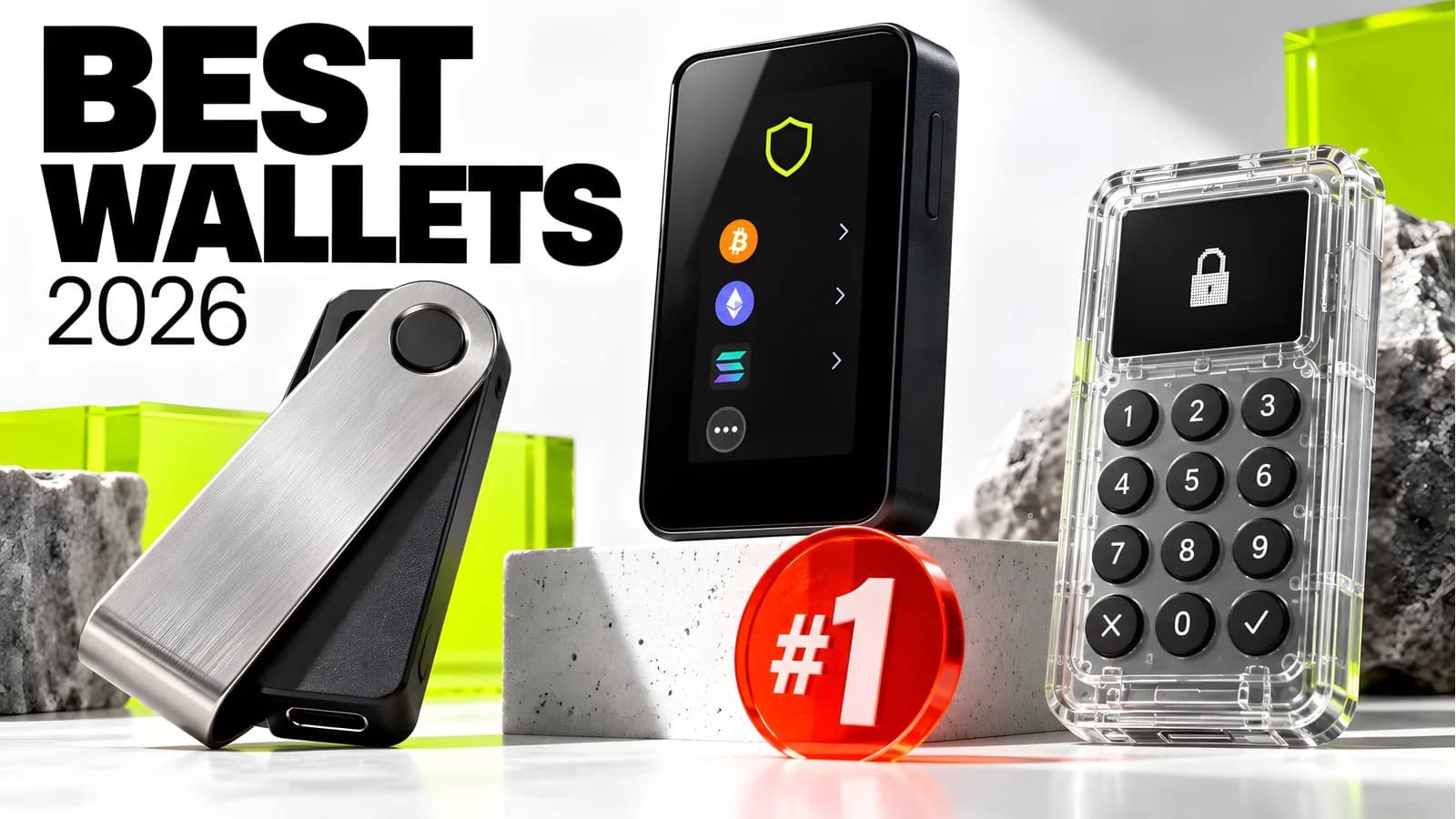
Best Hardware Wallet 2026
Best hardware wallet 2026 compared: Ledger, Trezor, Coldcard, Keystone, Tangem, BitBox02, Jade, and OneKey with current US prices, chips, and backup formats.
Get the next field guide
New protocol research, risk checks, and practical DeFi tools.